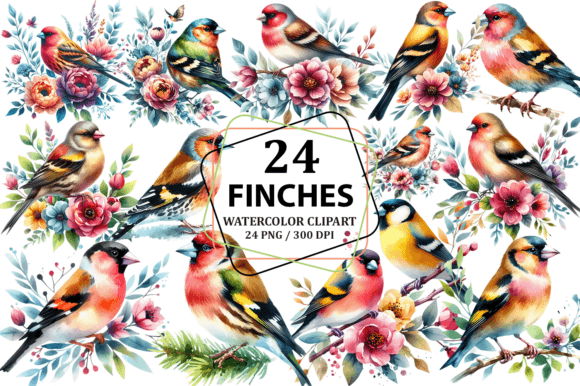
Watercolor Finches Clipart for Embroidery
As a designer who spends more time behind an embroidery machine than a computer screen, I approach digital assets with a healthy dose of skepticism. When I first opened the Watercolor Finches Clipart Sublimation files, I wasn't just looking at pretty artwork; I was mentally digitizing. The immediate impression is one of delicate, organic charm. These illustrations capture the softness and movement typical of watercolor media, which presents a unique challenge and opportunity for us in the textile space. Unlike rigid vector art or traditional clipart, these finches possess a visual personality that feels hand-painted rather than manufactured. For those of us creating handmade products, this aesthetic is gold, but it requires a thoughtful translation from screen to stitch.
Translating Soft Art into Tangible Stitches
The primary consideration when evaluating this collection for real-world application is how the watercolor texture converts into thread. In my studio, I recently prepared a custom embroidered tote bag for a client who wanted a nature-inspired nursery theme. I selected one of the perched finch designs from this set. The mood was perfect—whimsical yet sophisticated—but the execution required planning. Watercolor edges are inherently blurry and gradient-heavy. If you attempt to replicate this with standard satin stitch borders, you risk creating a stiff outline that fights against the soft interior fill stitch.
For this tote bag design, I found that treating the Watercolor Finches Clipart Sublimation as a guide for artistic interpretation worked better than a strict trace. Using a combination of running stitch outlines to suggest the bird’s form and varied density fill stitches to mimic the paint washes created a result that honored the original illustration while respecting the limitations of fabric. This approach elevates the finished product from a simple decoration to a piece of textile art. It signals to the buyer that this is a premium, custom apparel item or personalized gift, not a mass-produced factory print.
Ideal Applications for Boutique and Gift Markets
Based on my testing and past project experience, these finch illustrations excel in specific niches. They are exceptionally strong for baby embroidery and nursery decor. The gentle color palette and non-aggressive styling make them ideal for blankets, bibs, and wall hangings where a harsh, high-contrast design might feel out of place. For Etsy sellers focusing on the cottagecore or botanical aesthetic, these designs provide instant brand consistency across multiple listings.
Beyond baby items, I see significant potential in holiday embroidery and wedding gifts. A pair of finches can symbolize partnership or new beginnings, making them a meaningful choice for anniversary tea towels or pillow covers. For small shop owners, this versatility is crucial. You aren't buying a single-use file; you are acquiring design assets that can span seasons. Whether applied to a sweatshirt embroidery project for spring markets or a festive apron for winter craft fairs, the finches maintain their relevance. The key is letting the illustration breathe. These designs work best when they are the focal point, surrounded by negative space that allows the stitching clarity to shine.
Navigating Fabric Choices and Technical Limits
While the artistic value is high, practical judgment is necessary regarding where not to use these designs. The watercolor style relies on subtle color transitions. On dark fabrics, these nuances often get lost unless you employ a heavy white underlay, which can alter the hand-feel of the garment. I would advise caution when using Watercolor Finches Clipart Sublimation on black navy sweatshirts or dark denim without extensive testing. Light to medium-toned natural fibers like linen, cotton canvas, and unbleached muslin are the safest bets for preserving the integrity of the original artwork.
Texture is another variable. Highly textured fabrics like terry cloth or thick fleece can swallow the fine details that define the watercolor look. If you are working on kitchen towels or plush blankets, consider simplifying the design or increasing the stitch density in critical detail areas. Conversely, on thin or stretchy fabrics like jersey knits, the complexity of replicating watercolor gradients can lead to puckering. Always pair these designs with appropriate stabilizer. A cut-away stabilizer is usually mandatory for apparel to prevent distortion, whereas a tear-away might suffice for stable woven goods like tote bags or patches.
Be particularly mindful of hoop size and scaling. Reducing these illustrations too much will turn the beautiful watercolor washes into muddy blocks of thread. There is a minimum threshold for detail in machine embroidery design. Before committing to a 4x4 hoop size, verify that the smallest elements of the finch remain distinct. If the beak or eye detail disappears at smaller scales, the design loses its character. In such cases, it is better to use the design as a larger back piece on a jacket or a centerpiece on a pillow cover rather than forcing it onto a cap or pocket where it cannot be appreciated.
Professional Workflow and Quality Assurance
For commercial embroidery professionals and digital product sellers, due diligence is non-negotiable. Never assume a sublimation file is ready-to-stitch. You must check the licensing terms included with the Watercolor Finches Clipart Sublimation package. Some licenses allow for finished physical products but restrict the sale of digital embroidery files or printable mockups. Clarifying this protects your business and respects the original artist's rights.
I strongly recommend a standardized testing protocol before listing any item featuring these finches:
- Stitch Out Verification: Always run a test on scrap fabric that matches your final project material. Screen colors do not equal thread colors.
- Contrast Check: Review thread colors against the fabric in natural light. Watercolor palettes can sometimes appear washed out under indoor lighting.
- Density Analysis: Inspect the transition areas between colors. If the embroidery file has excessive jumps or trims, edit them out to ensure a clean finish.
- Wash Test: For items like baby clothes or tea towels that require frequent washing, launder your sample to ensure the stitch coverage holds up and the design doesn't distort.
- Mockup Accuracy: If selling online, use realistic mockups. Do not simply overlay the digital illustration on a shirt photo. Show what the actual embroidery looks like to build customer trust and manage expectations.
Ultimately, Watercolor Finches Clipart Sublimation offers a beautiful foundation for creative entrepreneurs. It bridges the gap between digital art and tactile craft, allowing makers to offer something that feels authentically handmade. By approaching these illustrations with technical respect and artistic sensitivity, you transform a simple graphic into a cherished heirloom or a best-selling boutique item. The success lies not just in the design itself, but in the thoughtful decisions you make during the production process. Take the time to understand the interplay of thread, fabric, and art, and your finished products will undoubtedly reflect that level of care and professionalism.