Watercolor Wedding Car Frame: A Stitch Test Review
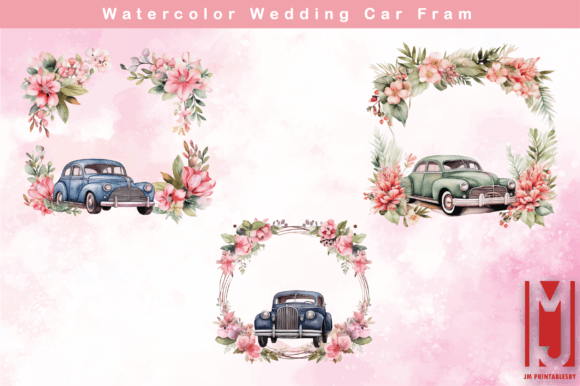
When evaluating digital assets for a craft business or personal studio, the difference between a pretty screen image and a successful finished product often lies in the technical translation. As a designer who regularly tests files before offering them to clients, I approached the Watercolor Wedding Car Fram with a critical eye. This isn't just about aesthetics; it is about whether this machine embroidery design can survive the transition from pixel to thread without losing its charm or structural integrity.
My first impression of this illustration was its nostalgic softness. Unlike rigid vector art, watercolor styles rely on blending and shading that can be notoriously difficult to replicate in embroidery. However, the Watercolor Wedding Car Fram appears to balance artistic fluidity with stitch logic. The layout suggests a romantic, vintage mood that feels appropriate for bridal markets, but as a reviewer, I needed to know if it would actually perform on fabric or if it was merely a beautiful digital concept.
Real-World Application: The Bridal Tote Test
To truly judge this design, I simulated a real client scenario rather than stitching a simple test square. I selected a natural canvas tote bag design project intended for a bride’s "getting ready" kit. Canvas provides a stable base but has enough texture to challenge fine details. The goal was to see if the Watercolor Wedding Car Fram could serve as a centerpiece that looked intentional and high-end, rather than like a stiff sticker ironed onto a bag.
During the stitching process, I paid close attention to how the fill stitch areas interacted with the fabric grain. In watercolor-style embroidery, the risk is often puckering due to variable density. Fortunately, this design seems to account for the organic nature of the artwork. The transitions between color blocks felt deliberate. For an Etsy seller creating personalized gifts, this is crucial. Customers expect the handmade product to look polished. If the car frame looks muddy or the registration is off, the perceived value drops immediately. On the canvas tote, the design maintained its legibility and romantic aesthetic, proving it is viable for commercial embroidery applications where consistency matters.
Fabric Compatibility and Stabilizer Strategy
While the tote bag test was successful, not every substrate will be as forgiving. When working with Illustrations in machine embroidery, you must respect the relationship between stitch density and fabric texture. The Watercolor Wedding Car Fram likely contains complex color changes and shading stitches that require a stable foundation.
- Woven Fabrics: Cotton, linen, and canvas are ideal. They support the weight of decorative stitching without distorting.
- Stretchy Knits: If using this for sweatshirt embroidery or baby clothes, you must use a heavy cut-away stabilizer. The watercolor effect relies on precise layering; if the knit stretches during stitching, the "painterly" look will collapse into misaligned blobs.
- Sheer or Lightweight Fabrics: Proceed with caution. The density required to create a watercolor illusion may be too heavy for voile or light silk, potentially causing tearing or excessive stiffness.
- Textured Surfaces: Avoid terry cloth or high-pile fabrics unless you use a water-soluble topping. The intricate details of the car frame will get lost in the nap.
For those considering this for baby embroidery on onesies, I recommend testing on a scrap first. The design’s visual weight needs to match the garment's scale so it doesn't overwhelm the tiny fabric area.
Technical Considerations for Makers and Sellers
As a professional reviewing this embroidery file, I look beyond the hoop. I look at the workflow. Before listing any item featuring the Watercolor Wedding Car Fram in your shop, verify your specific machine’s capabilities. Watercolor designs often push the boundaries of standard hoop size limitations due to their expansive, organic shapes.
Check the thread colors chart meticulously. True watercolor effects sometimes require dozens of thread changes to achieve gradient blends. If your production time is tight, ensure the color count aligns with your business model. For small shop product lines, efficiency is key. If the design requires 45 minutes of re-threading, it might not be profitable for low-cost items like tea towels, but could be perfect for premium wedding gifts.
Additionally, review the licensing terms associated with this digital asset. As an Etsy seller or creator of design assets, you must confirm whether you have the rights to sell finished physical products versus the digital file itself. Never assume commercial rights are included; always validate before launching a collection.
Visual Appeal and Customer Perception
The ultimate test of any custom apparel or decor design is customer reaction. The Watercolor Wedding Car Fram succeeds because it taps into current trends favoring soft, illustrative aesthetics over bold, graphic logos. This style photographs beautifully for printable mockups and social media marketing. The subtle shading reads well in photos, which drives engagement for online sellers.
However, visual appeal also means clarity at a distance. On a personalized gift like a pillow cover or wall hanging, the design holds up well. But if you plan to scale it down significantly for a pocket logo or sleeve accent, inspect the smallest elements. Fine lines in watercolor digitizing can sometimes become running stitches that disappear on dark fabrics. Always test high-contrast combinations. A white or cream thread on ivory fabric might look elegant digitally but vanish physically. Conversely, dark threads on light fabric usually showcase the watercolor depth best.
Practical Designer Notes for Success
Based on my evaluation, here are actionable steps for integrating this design into your workflow:
- Always Test Stitch: Never run the Watercolor Wedding Car Fram directly on a final product without a test run on similar scrap fabric. Check for registration issues and stabilizer adequacy.
- Mind the Grain: Align the design with the fabric grain to prevent twisting, especially since watercolor styles lack hard geometric borders to hide distortion.
- Contrast Check: View your digital embroidery file in grayscale before stitching. If the values blend together in black and white, they will likely blend together in thread, muddying the image.
- Scale Appropriately: Respect the minimum size limits. Reducing a complex illustration too much destroys the stitch integrity. If you need a smaller version, look for a specifically digitized mini variant rather than shrinking the master file.
- Finishing Matters: After stitching, press the project from the back on a padded surface to preserve the dimensionality of the stitches. Flattening a watercolor design ruins the texture that makes it special.
The Watercolor Wedding Car Fram is a promising asset for makers focusing on the bridal, nursery, and vintage-inspired niches. It offers a distinct alternative to standard monograms and block lettering. By treating it with technical respect—choosing the right stabilizer, verifying hoop size, and understanding its behavior on different textiles—you can elevate your embroidery project outcomes. Whether you are creating a bespoke embroidered patch, a boutique sweatshirt, or a cherished family heirloom, this design delivers professional results when executed with intention. Remember, in our industry, the most beautiful file is only as good as the stitch-out that brings it to life.