Watercolour Amur Leopards: Illustrations for Branding
Evaluating Visual Tone for Wildlife and Eco-Conscious Clients
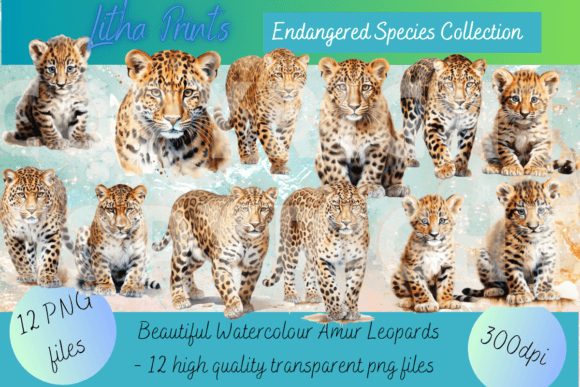
When reviewing a new graphic design asset for a client project, my first assessment always focuses on emotional resonance and technical versatility. The Watercolour Amur Leopars collection immediately establishes a specific mood that is distinct from standard vector wildlife art. Unlike rigid digital vectors, these illustrations carry the organic unpredictability of traditional media. For a recent concept pitch aimed at a sustainable skincare line, this aesthetic was crucial. The soft edges and natural pigment bleeds communicated gentleness and authenticity, qualities that clean lines often fail to convey. As a professional designer, I look for assets that do more than fill space; they must anchor the narrative. This collection succeeds in creating an atmosphere of rare beauty and conservation awareness without feeling overly aggressive or cartoonish.
Integration into Sustainable Packaging and Product Labels
In practical application, specifically for packaging design and product labels, these leopards perform exceptionally well as focal points. During a mockup phase for a boutique tea brand, I utilized the leopard imagery as a central hero element on a matte-finish box. The watercolor texture interacted beautifully with the uncoated paper stock simulation, enhancing the perception of a handmade business. However, designers must be mindful of ink density. Because watercolor relies on transparency, these assets require careful color management when preparing files for commercial printing. They are ideal for print-on-demand products like tote bags and ceramic mugs where the fabric or surface texture adds to the artistic value. For sticker design, the irregular edges of the paint strokes create a natural die-cut line that feels intentional rather than clipped.
Typography Pairings and Hierarchy Considerations
A critical aspect of using any detailed clipart is ensuring it supports rather than competes with typography. With Watercolour Amur Leopards, the visual weight is significant due to the intricate spotting patterns and brushwork. In my testing, pairing these illustrations with bold sans-serif fonts created a jarring disconnect. Instead, I found success using elegant serif typefaces or delicate handwritten scripts that mimic the fluidity of the paint. When designing social media graphics or Instagram posts, place the text in negative space adjacent to the animal rather than overlaying it directly on complex fur details. Maintaining clear visual hierarchy ensures the message remains legible while the art provides emotional context. This balance is vital for brand identity projects where recognition depends on both image and wordmark clarity.
Performance Across Digital Platforms and Editorial Layouts
Digital applications present different challenges than print. For web design and blog visuals, file optimization is paramount. High-resolution watercolor textures can result in heavy load times if not properly compressed. I recommend using these assets as optimized PNG designs with transparent backgrounds for hero sections or feature images. In editorial design for magazines or newsletters, the leopards serve as excellent section dividers or pull-quote accents. Their organic shapes break up rigid grid layouts effectively. For content creators building Canva templates, these elements add a premium feel that generic stock photos lack. However, ensure you are providing enough whitespace around the illustration so users can easily customize text without obscuring the artwork's defining features.
Crafting for Cricut and Sublimation Projects
The maker community represents a massive segment of potential users for this design bundle. For Cricut project enthusiasts, the complexity of watercolor can be tricky. Standard vinyl cutting requires solid paths, which these painted textures do not naturally possess. Designers intending to sell SVG design files for cutting machines should consider offering simplified silhouette versions alongside the full-color raster art. Conversely, for sublimation design, these assets are perfect. The gradient transitions and color variations translate stunningly onto polyester fabrics and coated hard substrates. Small business owners selling on Etsy will find that t-shirt design featuring these leopards appeals to niche audiences interested in wildlife conservation and nature aesthetics, provided the print file is high-quality CMYK or RGB depending on the printer's requirements.
Technical Due Diligence Before Commercial Deployment
Before committing Watercolour Amur Leopards to a paid client deliverable, rigorous technical vetting is non-negotiable. Always inspect the PNG design transparency mask. Poorly removed backgrounds leave white halos that ruin dark-mode designs or colored packaging. Zoom in to 400% to check for pixelation or compression artifacts; true professional work demands crisp edges even at large scales. Test the asset in grayscale to verify contrast. If the leopard disappears against a mid-tone background, it lacks sufficient tonal range for versatile use. Furthermore, confirm the commercial license terms explicitly. Some creative marketplace assets restrict usage in logo design or trademark registration. Knowing these boundaries protects both the designer and the client from future legal complications regarding intellectual property.
- Contrast Testing: Always preview on both pure white and deep charcoal backgrounds to ensure visibility.
- Scale Verification: Check detail retention at 2 inches wide versus 20 inches wide to determine minimum viable size.
- Format Flexibility: Verify if editable source files (PSD/AI) are included for color grading adjustments.
- Mockup Reality: Never rely on screen view alone; print a test swatch to see how watercolor grain renders physically.
- Licensing Audit: Document permitted uses for POD, digital resale, and branding to avoid infringement.
Strategic Limitations and Contextual Awareness
While visually striking, Watercolour Amur Leopards are not universally appropriate. They should be used with extreme caution in minimalist corporate branding or tech-focused identities where precision and geometry signal trust. The inherent messiness of watercolor can undermine messages requiring clinical accuracy or strict modernism. Additionally, avoid using these detailed illustrations at very small sizes, such as favicon icons or tiny footer logos; the spots will merge into mud, destroying recognition. In crowded layouts with multiple competing elements, this asset can add visual noise rather than value. It thrives in solitude or as part of a curated thematic collection. Understanding where not to use a digital product is just as important as knowing its strengths. Professional judgment lies in restraint.
Enhancing Brand Trust Through Authentic Artistry
Ultimately, the decision to incorporate Watercolour Amur Leopards into a marketing visuals strategy hinges on audience alignment. For brands targeting eco-conscious consumers, parents, or art lovers, the handcrafted quality signals care and intentionality. This emotional connection drives engagement far better than sterile stock photography. Whether used for a seasonal campaign, a charity fundraiser, or a luxury stationery line, the asset brings a soulful presence to the layout. By treating this illustration as a collaborative partner in the design process rather than mere decoration, designers can elevate their output from functional to memorable. The key is respecting the medium's nature while applying rigorous professional standards to ensure the final result serves the client’s business goals effectively and ethically.