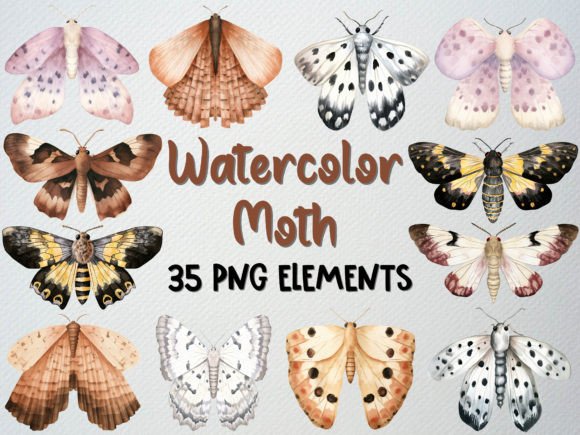
Watercolor Moth Clipart Illustrations for Branding
First Impressions: Evaluating Mood and Audience Perception
As a brand designer reviewing assets for an upcoming seasonal campaign, my first interaction with Watercolor Moth Clipart, Insect Clipart sets the tone for the entire project. When evaluating this graphic design asset, the immediate impression is one of organic softness and nostalgic elegance. Unlike sharp vector graphics or rigid corporate iconography, these watercolor illustrations carry an inherent texture that signals authenticity. For a small business launching a botanical skincare line or a sustainable stationery brand, this mood is critical. It communicates to the audience that the product is handmade, thoughtful, and connected to nature.
The emotional resonance of this clipart leans heavily into themes of transformation, quiet beauty, and nocturnal mystery. From a content marketing perspective, this allows us to tap into specific audience psychographics. We aren't just selling a product; we are inviting the customer into a slower, more intentional lifestyle. However, as a marketer, I must also assess versatility. Does this asset feel too rustic for a premium price point? In this case, the delicate brushwork elevates the perception of value, making it suitable for both casual artisan branding and high-end editorial layouts. The key lies in how we frame the illustration within our broader visual hierarchy.
Strategic Application in Product Launches and Packaging
In a real-world scenario, imagine we are preparing a "Midnight Garden" limited edition collection. This is where Watercolor Moth Clipart, Insect Clipart transitions from a decorative element to a strategic branding tool. For packaging design, specifically product labels and box inserts, the moth serves as a visual anchor. It differentiates the SKU on a crowded shelf without requiring aggressive typography. When applied to a matte paper stock, the watercolor texture mimics traditional printing methods, reinforcing the artisanal narrative essential for small business branding.
Beyond physical goods, this asset performs exceptionally well in digital touchpoints. For social media graphics promoting the launch, the moth can be used as a recurring motif across Instagram carousels and Pinterest pins. Consistency builds recognition. By using the same stylistic elements in our Canva templates and email banners, we create a cohesive campaign experience. As a digital product creator, I appreciate that this style scales well. It looks intentional on a large website hero banner but retains its charm when reduced to a sticker or a favicon-sized accent. This flexibility is vital for maintaining brand identity across disparate platforms while ensuring the visual language remains unified.
Supporting Marketing Goals Through Visual Storytelling
Effective content marketing relies on visuals that stop the scroll without screaming for attention. This illustration supports several key marketing objectives:
- Emotional Connection: The organic imperfections of watercolor foster intimacy, helping to build audience trust faster than sterile stock photography.
- Visual Hierarchy: The directional flow of moth wings naturally guides the viewer’s eye toward headlines or call-to-action buttons in digital ads.
- Professional Appearance: High-resolution PNG design files ensure that even DIY marketers can achieve a polished look in their promotional materials.
- Seasonal Relevance: Perfect for autumn, spring, or celestial-themed campaigns, providing timely context for marketing visuals.
When integrated correctly, this asset does more than decorate; it clarifies the brand voice. It tells the consumer exactly what kind of experience to expect before they read a single word of copy.
Optimal Placement vs. Contextual Limitations
Knowing where to use Watercolor Moth Clipart, Insect Clipart is only half the battle; knowing where to avoid it is equally important for professional results. This asset shines brightest in editorial design, blog headers, lead magnets, and decorative brand elements. It is particularly effective for wellness coaches, jewelry makers, and wedding stationers who need to convey romance and softness. In these contexts, the illustration acts as a supportive layer that enhances the primary message.
However, caution is required in certain environments. For formal corporate branding or fintech companies, this aesthetic may undermine perceptions of stability and precision. In dense information layouts, such as technical spec sheets or data-heavy infographics, the organic edges of the moth can compete with grid lines and text blocks, creating visual noise. Similarly, on low-contrast backgrounds or extremely minimal interfaces, the subtle gradients of watercolor might disappear or look muddy on mobile screens. As a designer, I always advise against using this asset in text-heavy ads where readability is paramount. The goal is enhancement, not obstruction. If the clipart distracts from the offer or obscures the logo, it has failed its marketing purpose.
Technical Review and Designer Implementation Notes
Before integrating this design bundle into a paid campaign or client deliverable, rigorous testing is non-negotiable. Here is my checklist for ensuring commercial viability:
- Palette Integration: Test the clipart against your specific brand colors. Watercolors can sometimes shift hue when overlaid. Use blending modes in Photoshop or Canva to harmonize the tones.
- Typography Pairing: Assess how the illustration interacts with your font stack. This style typically pairs beautifully with elegant serifs and flowing scripts but can clash with geometric sans-serifs if not spaced correctly.
- Monochrome Viability: Check the black and white version. Will it still hold up in single-color print jobs or embossing? A strong SVG design should retain its silhouette integrity without color.
- Mobile Preview: Always preview web design and social assets on a phone screen. Details that look crisp on a desktop monitor may vanish at thumbnail size.
- Licensing Compliance: Verify the commercial license terms. Ensure you have the rights to use the asset in printable design products, client work, or paid advertising. Never assume usage rights based on file format alone.
- Competitor Audit: Search the creative marketplace to see how others are using similar assets. Your goal is to leverage the trend while maintaining distinctiveness in your professional branding.
By treating Watercolor Moth Clipart, Insect Clipart as a strategic component rather than mere decoration, marketers and designers can unlock its full potential. It bridges the gap between artistic expression and commercial communication, offering a versatile solution for brands seeking to connect with audiences on a deeper, more sensory level. Whether used for a boutique product label or a comprehensive digital campaign, the success of this asset ultimately depends on intentional application and respect for visual balance.