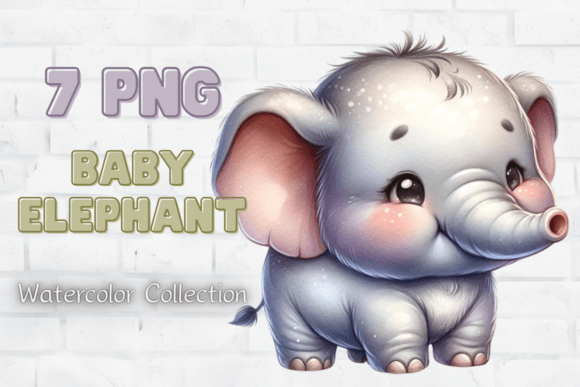
Baby Elephant Clipart Watercolor Nursery Illustrations
Evaluating Soft Whimsy for a Boutique Baby Brand Identity
When sourcing assets for a recent rebrand of a handmade organic cotton nursery line, my primary objective was finding visuals that balanced professional polish with genuine emotional warmth. The Baby Elephant Clipart Watercolor Nursery collection immediately stood out during the initial creative audit. As a graphic design asset, it avoids the overly saturated, cartoonish aesthetic that often plagues this niche. Instead, these illustrations offer a muted, sophisticated palette that aligns perfectly with modern design trends in the baby and maternity sector. The watercolor texture feels organic and hand-painted rather than digitally manufactured, which is crucial when establishing visual trust for a handmade business or small business branding project.
For this specific client project, we needed a versatile hero graphic for packaging design and social media graphics. The elephant motif carries universal symbolism of family, protection, and gentleness, making it an instant emotional hook for new parents. However, as a designer, I look beyond sentimentality. I need to know if the asset can withstand commercial application. Upon inspection, the brushwork in this clipart retains enough detail to scale up for posters yet remains soft enough not to overpower delicate typography. It successfully bridges the gap between playful nursery decor and high-end boutique branding, making it a strong contender for any creative design portfolio focused on children’s products.
Performance Across Packaging, Printables, and Digital Ads
In real-world application, the versatility of this digital product became apparent during the layout phase. We utilized the Baby Elephant Clipart Watercolor Nursery set across three distinct touchpoints: product labels, Instagram carousel templates, and printable wall art previews. For the product labels, the PNG design files featured clean transparency edges, allowing them to sit seamlessly against textured kraft paper backgrounds without jagged halos. This level of file quality is non-negotiable for professional packaging design where print clarity defines perceived value.
For the digital marketing campaign, the illustrations served as excellent supporting elements in Canva template layouts. Unlike rigid vector art, the watercolor style added necessary organic softness to otherwise structured grid layouts. When designing Pinterest pins and web design banners, the elephant acted as a directional cue, guiding the viewer’s eye toward the call-to-action without competing with the headline. For clients involved in print-on-demand or selling on Etsy, this asset works exceptionally well for sublimation design on onesies and tote bags. The color saturation is rich enough for fabric printing but retains the watercolor bleed effect that makes the merchandise feel artisanal rather than mass-produced.
Optimal Placement for Maximum Visual Impact
To get the best results from this illustration set, designers should leverage its strengths in specific contexts:
- Hero Graphics: Use the largest elephant element as a central anchor for website headers or invitation suites where negative space allows the watercolor texture to breathe.
- Themed Collections: Perfect for cohesive branding across a nursery product line, ensuring visual consistency from crib sheets to thank-you cards.
- Social Media Overlays: Works beautifully as a corner accent or background watermark in Instagram stories, adding brand recognition without obscuring text.
- Printable Wall Art: Ideal for creating gallery wall mockups or standalone digital downloads for creative marketplace listings.
- Sticker Design: The distinct silhouettes make for excellent die-cut sticker shapes for planner communities or baby memory books.
Navigating Visual Hierarchy and Readability Challenges
While the Baby Elephant Clipart Watercolor Nursery set is aesthetically pleasing, it requires careful handling to maintain professional standards. Watercolor inherently lacks hard edges, which can create readability issues if placed directly behind body copy. During our editorial design testing, we found that placing text over the darker washes of the elephant reduced contrast significantly. For brand identity materials like business cards or price lists, the illustration must serve as a peripheral accent rather than a text background to preserve visual hierarchy.
Designers should also exercise caution when using these assets at very small sizes, such as favicon icons or intricate jewelry tags. The subtle watercolor gradients can muddy when scaled down below one inch, losing definition and appearing as indistinct blobs. Furthermore, for minimalist branding projects that rely on stark geometry and ample whitespace, this asset may feel too ornate. It is best suited for brands that embrace warmth and tradition. If your client requires a sterile, corporate, or ultra-modern tech-forward aesthetic, this clipart will likely clash with the intended brand voice. Always assess whether the emotional tone of the illustration matches the strategic goals of the commercial design project before integration.
Critical Pre-Flight Checks for Commercial Application
Before committing this asset to a final client deliverable, run through this practical designer checklist to ensure technical and legal compliance:
- Contrast Testing: Always preview the illustration in grayscale. If the elephant disappears against the background in black and white, it will fail in low-quality print scenarios or accessibility checks.
- Typography Pairing: Test the clipart against various font families. It pairs naturally with handwritten scripts and rounded sans serifs but may conflict with sharp, condensed display fonts.
- File Integrity: Inspect PNG transparency for stray pixels. If editing is required, check if SVG design files are included for color adjustments, though note that true watercolor vectors are rare and often raster-based.
- Mockup Validation: Never approve a design based on screen view alone. Place the asset on realistic product mockups to verify scale and color accuracy relative to physical materials.
- Licensing Verification: Confirm the commercial license terms specifically. Some design bundles restrict use in print-on-demand or require attribution for digital products sold on platforms like Etsy.
- Resolution Check: Ensure the DPI meets print standards (300 DPI minimum) for t-shirt design and packaging, as web-resolution files will pixelate in production.
Final Verdict on Brand Consistency and Emotional Resonance
Ultimately, the Baby Elephant Clipart Watercolor Nursery collection proves to be a robust tool for designers targeting the maternal and infant market. Its strength lies in its ability to convey safety and tenderness instantly, reducing the cognitive load for consumers browsing crowded marketplaces. For my client’s organic nursery line, it provided the missing link between their sustainable values and their visual presentation. The asset elevated the perceived value of their marketing visuals and created a cohesive thread across digital and physical touchpoints.
However, successful implementation depends entirely on restraint and context. It is not a universal solution but a specialized instrument for evoking specific emotions. When used with proper attention to contrast, licensing, and placement, it transforms generic layouts into memorable brand experiences. For small business owners and content creators looking to add professional polish without hiring a custom illustrator, this set offers significant ROI. Just remember that in professional graphic design, the asset serves the strategy, not the other way around. Use it to enhance your narrative, support your typography, and connect with your audience on an emotional level, and it will undoubtedly earn its place in your creative toolkit.